sty
29
The video cannot be shown at the moment. Please try again later.
When you think of graphene, you think of a new super-material that dreams, and the future, are made of.
Today, ‘the future’ just got a little more present, thanks to news that the Graphene Flagship Consortium, a collection of industry and academic partners – including Nokia – looking to improve the world using graphene, was chosen by the European Union for the Future and Emerging Technologies (FET) program, triggering an investment of 1 billion euros that will be spread over the next 10 years.
Measuring only one atom thick, graphene is classed as a 2D structure with super-useful properties. While thin, it’s also the strongest material ever tested, having a breaking strength 300 times greater than steel. Oh, and it’s also the lightest and best intrinsic conductor, too.
The Graphene Flagship Consortium currently consists of 74 partners from the EU, from many different sectors. Nokia is flying the flag for the electronics corner, as well as the mobile one, with realistic dreams of improving the industry.

When asked about why Nokia is researching graphene and why this consortium is vital, Henry Tirri, EVP, CTO of Nokia explained:
“Nokia is proud to be involved with this project, and we have deep roots in the field – we first started working with graphene already in 2006. Since then, we have come to identify multiple areas where this material can be applied in modern computing environments. We’ve done some very promising work so far, but I believe the greatest innovations have yet to be discovered.”
“Graphene happens to be an area where we, in Europe, have all the important players in the value chain who are ready to use it in applications. From that perspective, this is a very efficient and promising way of doing research investments for Europe.”
Tapani Ryhänen, Head of the Sensor and Material Technologies Laboratory at Nokia also told us that:
“During the last 18 months we have seen a tremendous effort to build collaboration between European academia and industry. Now we have all the ingredients in place to be globally successful. We believe that new two-dimensional materials will have an impact on industrial value chains in many ways, creating opportunities for new products, services and economic growth.”
According to figures compiled by CambridgeIP, a UK-based patent consultancy, Asia and the USA are leading in terms of the number of patent publications, even though graphene was pioneered in Britain.
What is graphene?
The video cannot be shown at the moment. Please try again later.
This EU consortium is designed to boost research opportunities and to put the EU right in the heart of development. Jani Kivioja, Research Leader at Nokia Research Center, explains that it also has wider implications:
“Not only does creating a graphene research consortium open up new research possibilities, it will also create work and jobs across all of Europe. This kind of research is also an investment to the people that live within the EU, from an economy perspective.
“Globalisation has taken a lot of manufacturing out of the EU, whereas many countries still rely on industrial manufacturing. There is a huge opportunity to bring manufacturing back here, while using new materials and at the same time keeping manufacturing industries competitive,” continues Tapani.
Although graphene has received lots of media attention over the past few weeks, especially in the UK, as Henry mentioned, Nokia has been working with nanotechnologies since 2006, mostly from the Nokia Research Centre based in Cambridge, UK, and also with teams in Finland and Russia. You could say that we’ve been involved from the beginning, and there’s a good reason, Jani says:
“When we talk about graphene, we’ve reached a tipping point. We’re now looking at the beginning of a graphene revolution. Before this point in time, we figured out a way to manufacture cheap iron that led to the Industrial Revolution. Then there was silicon. Now, it’s time for graphene.”
Tapani notes that we shouldn’t expect to see everything made out of graphene. Instead, it’s all about improving existing materials and products to make them even better than before:
“Making products out of graphene will definitely happen across lots of different industries. By introducing people from different markets together within the EU-based consortium, we can begin to make real-world applications that benefit us all.
“Really, this type of technology has radically improved the properties of many materials that can be used in our industry. It was discovered in the EU, and we’re very proud to have been involved from the very early years and now to be participating in the consortium. We have a very functional research team in place that can do world-class research with our partners.
“We have kept our eyes open, and believe that this will bring immediate impact to our products over the coming years in some way or another.”

Tags: None
sty
29

Smartphones like the Nokia Lumia 920 spend all day sending data back and forth. This is obvious when it comes to things like email and social media, but your handset is a lot smarter than that. Apps send usage data so developers can improve them in future, other apps keep track of your location, and all of your details need to stay private, to remain secure. This is something that’s particularly relevant today, as 28 January is Data Privacy Day.
So what is privacy and security all about on a mobile phone, and how does it affect you as a user? Just as importantly, how does Nokia ensure you can trust its products? We’ve been talking to Janne Uusilehto, Director of Nokia Product Security and Mikko Niva, Nokia’s global privacy counsel to find out.
How does privacy affect Nokia and Nokia users?
Mikko: “Nokia’s privacy policy is all about being open and transparent about our privacy practices, collecting only data that is necessary for our business, providing meaningful choices to our users and taking the security of our user data very seriously.”
“We apply privacy by design to ensure privacy is integrated into our products right from the start. We don’t sell or share personal data without user consent. We don’t give user data to authorities unless we are required to do so by local law. We strive to offer a fair value to users in exchange for their data. We also work actively with regulators and industry.”

So where does security come into the equation?
Janne: “Security is creating certain controls to protect all assets we have in the device. It’s also protecting service providers, it’s protecting the authentication of the user, or even the identity of the users.”
“I have to deliver a functional security platform to Mikko, including a whole framework of processes, people technologies, instructions, standards and more, so he can execute his privacy policy. So Mikko is giving me requirements on what kind of security controls of what levels of robustness he wants me to deliver in order to have good privacy. There’s no privacy without security, although security is also about protecting other assets.”
Mikko: “Close collaboration between our security, privacy and data organizations is of the essence for Nokia to reach its business objectives while respecting privacy and security of our users.”

What does it mean for Nokia products and services?
Mikko: “This is about so much more than just telling users that some data is being collected. We are actually applying privacy early into our operations through appropriate privacy engineering and assurance activities. We have dedicated privacy resources in our units who work towards common objectives. In fact, we have a full privacy program with proper executive oversight, policies and processes with a lot of focus on awareness and training activities.”
“Last year we introduced robust privacy requirements to mobile application developers who publish their applications through Nokia Store. This was a major milestone in bringing more and more privacy into the ecosystem. Today, all applications that are published through Nokia Store are subject to these requirements. Non-conformance leads to rejection of the application.”
Janne: “Also the environment for Lumia phones is quite well protected. It’s not possible to download applications from anywhere outside the Windows Marketplace, so therefore there’s a level of control. That’s the whole idea of security; the consumer is having a role to play in the protection of data, we give them meaningful protection in technical terms, but we also give a certain level of freedom to do whatever they want with their devices.”

How does Nokia compare against other manufacturers when it comes to security?
Janne: “Balance is the thing the whole industry is working on. At one end is Android, with fewer controls, and users can do almost everything. The user is responsible for many of the security related decisions and the consequences. At the other end is Apple, and it’s much more limited to what you can put there without Apple’s approval. They are giving more control but less freedom, and that’s why Apple devices are under heavy attack to be jailbroken as quickly as possible. Our approach is somewhere in the middle.”
“You make a good business with open platforms, but then the user is getting more responsibility. You make good business with a closed environment, but the user is losing their freedom.”
And what about the rest of the industry?
Janne: “Nokia has been very proactive in the security area: we’ve been an industry driver over the past decade. Also in policy forums, and sharing security activities over SAFECode (a software forum for driving security) and security management principles, we’ve found that Nokia has been the leading mobile phone manufacturer, taking this area very proactively.
“Many industry players are more or less solving problems one by one, but we have been pretty good in our proactive internal awareness programs and engineering efforts. Awareness of security and privacy among users will increase in the future, and the industry is responding to that demand.”
image credit: AZRainman, Ssuaphotos, Leo Reynolds

Tags: None
sty
28
Yes i know to most of you out there this information about the iPad using a MicroSIM is not new to you, but for most of you in the Middle-East hungry for an iPad in your hands; HOLD YOUR HORSES!!! Let me first say that 100% of all GSM operators in the world use the default SIM size. Now good old Steve has given a nudge to the telecom operators around the world.
Apple’s big reveal of 2010 was the glorious iPad, some have given their critical analysis of the device. I say the device will pick up like any Apple device in the market. Now the jolt that the mobile industry got was that the iPad uses a MicroSIM enable it to use 3G. Apple’s tie or (love/hate) relationship with AT&T gave it a heads up on orders of MicroSIMS to deliver its service to its customers in the US.
So what is the (MicroSIM) : The 3FF SIM card, or the micro SIM, is 52% smaller than a regular SIM card so instead of a 15 x 25mm card you get a 12 x 15mm one. It’s still a GSM SIM so it will work in most markets. Now I believe Apple’s attempt to lock the SIM during the iPhone launch days blew up in their face.
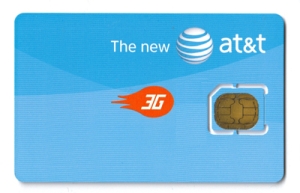
Last, This MicroSIM isn’t an industry stopper is it. Well no, most operators are going to offer a this MicroSIM as a bundle package with the iPad. I say why bother, request a twin SIM from your local operator, shave the new SIM with plastic or acrylic filer and your good to go. Haven’t tested it myself, I will surely let you know if it works as soon as my iPad lands.


Tags: None
sty
28

The sense of freedom, the sense of mobility, the outstanding feeling of knowing you left nothing behind. The Nokia Booklet 3G, where do I start? , but first let me make a statement. The Nokia Booklet 3G is a ‘Netbook’ and not a laptop so treat it as such.
Design, Size, Weight, Screen are flawless. I couldn’t say anything else, because I was surely impressed on how much Nokia put thought into this device. Speed for me is just fine; some have complained about its RAM and processor, frankly I would tell them they have no idea about computer mechanics. There is something they haven’t noticed and people like me would pay top dollars for. That is the NO FAN option, finally can sit in bed and not disturb anyone with the whizzing sound of the cooling fan. Plus what more can you ask from a netbook, use it as it was design and supposed to be used so just plug in a 2GB Flash drive and use it as a ReadyBoost or have you totally forgot about that?. Coming back to the essential elements of this device, using the 3G gave me the ability to sit where and when ever I want. No Dongles, Bluetooth, or Cable connections required. Power on and connect, simply amazing feeling you’ve got knowing you can get what you want in no time. The Nokia Booklet 3G is such a good device that I know use it as my own corporate computer device. Called in IT and asked them to remove my bulky laptop back it up on the local network so I could access it on my booklet. My desk is so clean right now it’s not even funny. I put this device to the ultimate test on the first day of work, dropped my notebook pens and every manual item you can possibly take to a meeting. Fired up OneNote, held a 3 hour meeting took all the notes I needed on my Booklet, attached pictures from my N900 and I was the first one out of the door. Didn’t have to gather all my papers, put together my laptop disconnect my charger, and wind up all sorts of wires. The best part I even leave quicker, All I’ve got is my Booklet and I’m out, charger is at home.
Last but not least, and I know most of you want to hear some partially negative things about this device and I don’t blame you. Nothing is perfect, and yes for some the Nokia Booklet is not the perfect device. But I can highlight some things that can be on the list of improvements for the RX-80 probably. First I would love a touch screen integration, which would make things a lot faster for me. The keyboard keys to be backlit, would make a big difference in low light environments. The ‘Ctrl’ key to be on the very left instead of the ‘fn’ key. More Nokia related software built-in, to control the connectivity. Would love a remote viewer built-in so I could make calls with my device but talk and hear it through my booklet or my BH-504 connected to my booklet. Why bother all your customers with the SIM lock by AT&T, It’s very easy to crack save us the hassle and include a Nokia UI for the SIM connectivity.
Final review thought, if you’re looking for being connected ‘Full Internet As It Happens’ the Nokia Booklet 3G is the device for you. If you’re a laptop speed oriented and has 16 million applications and programs the Nokia Booklet 3G won’t do for you. If you’re a on the move business person, looking for agility and essential connectivity, the Nokia Booklet 3G serves every single part of that.

Nokia Booklet 3G


Tags: None
sty
27
Od jutra obowiązywać będą nowe ceny wybranych modeli: Windows Phone 8S by HTC Samsung i8160 Galaxy Ace II Samsung i8190 Galaxy S III mini Samsung S6500 Galaxy mini II Szczegóły w cenniku
Tags: None
sty
27
Od jutra obowiązywać będą nowe ceny wybranych modeli: Windows Phone 8S by HTC Samsung i8160 Galaxy Ace II Samsung i8190 Galaxy S III mini Samsung S6500 Galaxy mini II Szczegóły w cenniku
Tags: None
sty
27

Enjoying Nokia Music on your Lumia, and want more of it? You’re in luck. Nokia today announces Nokia Music+, which brings a slew of new and richer options for a low monthly subscription fee of €3.99.
For those that love the original free Mix Radio service, it will remain intact – this is all about adding extra.
Jyrki Rosenberg, VP Entertainment at Nokia, told us, “People love Nokia Mix Radio – in fact, many people are amazed that we can offer it for free.
“It’s the only smartphone music service out there offering access to millions of songs out of the box without the need to sign up, sign in, or suffer adverts in between enjoying the music. When you add in the ability to skip songs and save playlists for offline uses like the tube, you have something unique.
“We spend a lot of time listening to how people use the service and have even managed to half the amount of skips per songs played, which is a combination of our systems and musicologists understanding and shaping Nokia Music around the users.
“Nokia Music is great for discovering new music, and we’ve found that there’s a core of users that want even more of it. This is how Nokia Music+ came about. By introducing features like infinite skips and unlimited downloads, we’re opening the doors for unlimited music discovery at only €3.99 per month.
“This is for people who care enough about music to pay something for more quality and choice, but don’t want to pay €9.99 monthly.”

So what do you get?
Unlimited skips. Whether you like to skip from track to track, or just want extra control over what you hear. There’s no stopping you with Nokia Music+.
Unlimited downloads. The free service allows you to download up to four Mixes (each of which contains hours of music) and play them without an Internet connection. The paid service removes this limit – you can download a massive supply of offline music you can swap as you wish.
Higher quality. We were surprised by the high quality of streaming music from Nokia Music, even over a 2.5G connection. Nokia Music+ allows you to download music at eight times the existing quality. Plus, you can set rules to only download high quality when you’re on WiFi, for example.
Lyrics. Words to the songs you’re listening to, right on your Nokia Lumia. Either in a scrolling list, Karaoke-style format, or a display you can scroll up and down.
On your desktop. The Nokia Music+ subscription also gives you access to the service without your phone. A web-app gives you the ability to play Mixes on your computer, smart TV or other connected screens.
Nokia Music+ will roll out in the next few weeks. The price will vary slightly according to territory, but is expected be available at around €3.99/month.

Tags: None
sty
26
Kochani polecam Wam dzisiejszy tekst w Rzeczpospolitej (wersja na rpkom.pl ). Nasz szef marketingu Bartosz Dobrzyński przedstawił w nim wizję nielimitowanego dostępu do netu po LTE. Lubię ten koncept bardzo, ale musimy poczekać jeszcze na LTE  Czekamy jak na szpilkach na wyniki przetargu na częstotliwości 1800 MHz. Może ktoś z Was wie przypadkiem kiedy [...]

Tags: None
sty
26
Rok 2013 Play rozpoczął od wprowadzenia nowej ulepszonej oferty postpaidowej w postaci FORMUŁ: S, M i L, które są kontynuacją gorąco przyjętej przez klientów w roku ubiegłym, FORMUŁY 4.0, czyli oferty zryczałtowanej z nielimitowanymi połączeniami do wszystkich sieci w opłacie miesięcznej za jedyne 79zł. Ponieważ jest to kolejna ciekawa innowacja marki Play do jej wsparcia [...]
Tags: None
sty
26
Kto obserwował dziś Facebooka, na pewno już się dowiedział, że do końca dnia można złapać fajne bonusy za doładowania  Jakie benefity można otrzymać? 50 SMS-ów za doładowanie od 5 do 10 zł 50 minut za doładowanie od 11 do 25 zł 50% więcej za doładowanie powyżej 25 zł Bonusy sumują się! Z każdego można [...]

Tags: None


